Tree Removal in Asheville, NC
A tree that has become unsafe can put your home, driveway, and surrounding property at risk. Dead branches, trunk damage, root problems, and storm injuries can all affect a tree’s stability.
If you need tree removal in Asheville, NC, the first step is understanding the tree’s condition and its surroundings. Some trees can be removed through controlled sectional cutting. Others need specialized equipment because of their size or location.
Whether you have a dead tree in your yard, a damaged tree near your home, or an overgrown tree affecting your property, a proper removal plan matters.
The goal is to remove the tree safely while limiting unnecessary damage to nearby structures and landscaping.
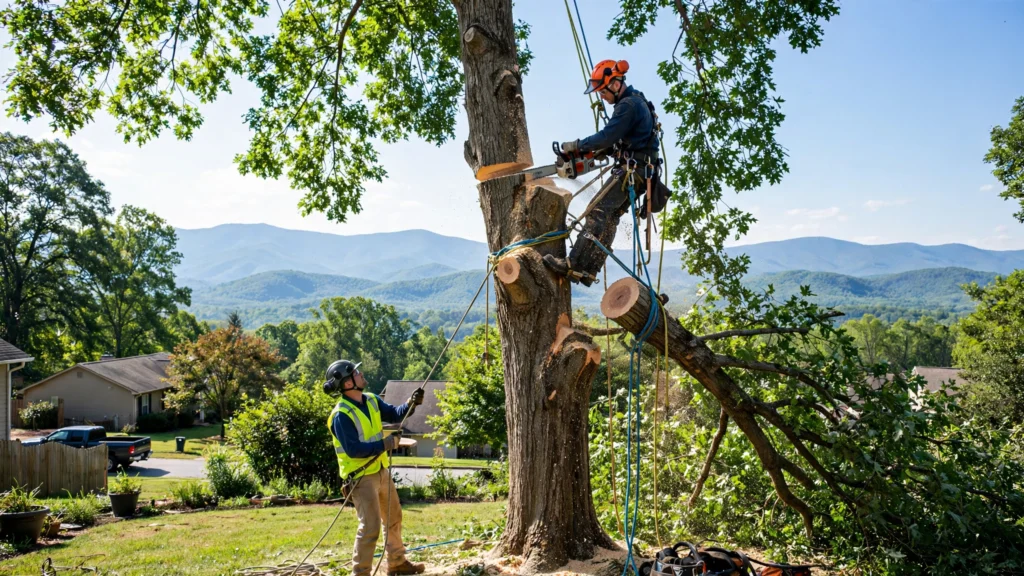
Professional Tree Removal Services in Asheville
Tree removal is not the same for every property. The size, condition, location, and surrounding obstacles all affect the work involved.
A removal plan should account for the tree itself and everything around it.
Residential Tree Removal
Trees add shade and character to residential properties. However, some eventually become damaged, unhealthy, or poorly positioned.
A tree may need removal when it creates a serious concern for the house, garage, driveway, or outdoor living area.
Residential tree removal may involve:
- Dead or severely declining trees.
- Trees with major structural damage.
- Trees damaged by strong winds.
- Trees growing too close to buildings.
- Trees interfering with planned property improvements.
- Trees with significant root or trunk problems.
Before removing a healthy tree, consider whether pruning or another management option could solve the problem.
Dead Tree Removal
A dead tree can become increasingly unstable as its wood deteriorates. Large branches may break, and the trunk may lose structural strength.
Watch for signs such as extensive dead branches, missing bark, fungal growth, and major trunk damage.
However, no single symptom confirms that a tree is dead or unsafe. An assessment can help determine its condition and the appropriate next step.
Removing a dead tree before it causes damage may help reduce certain property risks.
Hazardous Tree Removal
A hazardous tree can threaten people, buildings, vehicles, and other property.
Some warning signs include:
- A sudden change in the tree’s lean.
- Large cracks in the trunk.
- Broken branches hanging above occupied areas.
- Exposed or damaged roots.
- Significant decay near the trunk.
- A damaged trunk following a storm.
Not every leaning or damaged tree requires removal. The level of risk depends on its condition and what could be affected if it fails.
A professional assessment can help determine whether removal is necessary.
Large Tree Removal
Large trees often require more planning than smaller trees. Their height, trunk diameter, weight, and position can affect the removal method.
The work may involve cutting the tree into smaller sections instead of bringing down the entire trunk at once.
Nearby homes, fences, driveways, and landscaping also influence the plan.
The available working space matters. Limited access can make a large removal more complex.
Storm-Damaged Tree Removal
Strong winds and heavy rain can damage branches, trunks, and root systems.
A tree may remain standing even after suffering serious structural damage. Broken limbs can also become trapped in the canopy.
Do not approach unstable trees or attempt to cut hanging branches yourself.
If a damaged tree is close to a building or public area, keep people away and arrange an assessment.
For urgent situations, visit our emergency tree service in Asheville page.
When Should You Remove a Tree?
Tree removal is sometimes necessary, but it should not be the automatic response to every tree problem.
The following conditions may justify a closer inspection.
The Tree Has Extensive Structural Damage
Deep trunk cracks, major splits, and severe damage to supporting branches can affect stability.
The location of the damage matters. A tree near a home may present a greater concern than one in an open area.
The Tree Has Significant Decay
Decay can weaken important parts of a tree. Some internal problems are difficult to identify from the outside.
Fungal growth near the base, cavities, and damaged wood can be reasons for further investigation.
The Roots Have Been Damaged
Roots help anchor a tree and absorb water and nutrients.
Construction, excavation, soil changes, and erosion can affect the root system.
Raised soil around the trunk or newly exposed roots may indicate a problem that needs attention.
The Tree Is Interfering With Property Improvements
Sometimes, property owners need to clear space for construction, landscaping, access roads, or other improvements.
Before removing trees for these purposes, check applicable local requirements and property restrictions.
The Tree Has Died
Dead trees can lose branches and structural strength over time.
Their removal may be necessary when they stand near homes, walkways, parking areas, or other places where people could be exposed to falling wood.
How Tree Removal Works
A properly planned removal starts with an assessment. The method depends on the tree and the conditions around it.
Step 1: Assess the Tree and Surrounding Area
The first step is to examine the tree’s condition, size, and location.
Important considerations include:
- Trunk condition and visible decay.
- Major branches and canopy structure.
- Nearby buildings and obstacles.
- Ground conditions and slope.
- Equipment access.
- Possible hazards around the work area.
This information helps determine the appropriate removal approach.
Step 2: Plan the Removal Method
Some trees have enough open space for controlled ground-based removal.
Others need to be dismantled in sections because nearby structures prevent the entire tree from coming down safely.
The removal plan should consider where each section will be lowered or placed.
Step 3: Prepare the Work Area
The area around the tree needs to be controlled before cutting begins.
Vehicles, outdoor furniture, and other obstacles may need to be moved.
People and pets should stay outside the work zone.
Step 4: Remove the Tree
The removal method depends on the tree’s size, condition, and surroundings.
In confined spaces, crews may remove branches and trunk sections individually.
Larger or difficult projects may require additional equipment.
Step 5: Handle Logs and Branches
Tree removal can leave substantial amounts of wood and organic debris.
The agreed cleanup plan should explain what happens to branches, logs, and smaller material.
Wood chipping may be suitable for certain branches and brush.
Step 6: Discuss Stump Grinding
Removing the trunk does not automatically remove the stump.
If you want the remaining stump reduced below ground level, arrange stump grinding in Asheville as part of the project.
Confirm the grinding depth and cleanup arrangements before work begins.
Tree Removal Near Houses, Driveways, and Fences
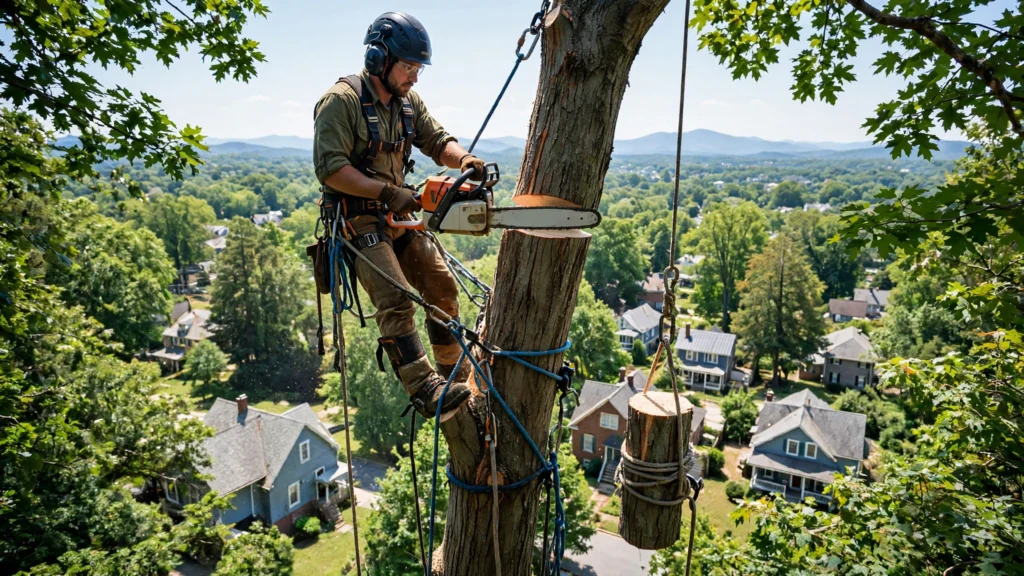
Removing a tree close to a structure requires careful planning.
A branch or trunk section can cause damage if it falls in the wrong direction. Limited working space can also restrict equipment movement.
The removal approach may involve sectional dismantling.
This means removing selected branches and trunk sections in a controlled sequence.
Before approving the work, discuss:
- The distance between the tree and nearby structures.
- Available equipment access.
- How cut sections will be lowered.
- Protection for nearby landscaping.
- Where logs and branches will be placed.
- The expected cleanup scope.
The best removal method depends on the actual site conditions.
What Affects Tree Removal Cost in Asheville, NC?
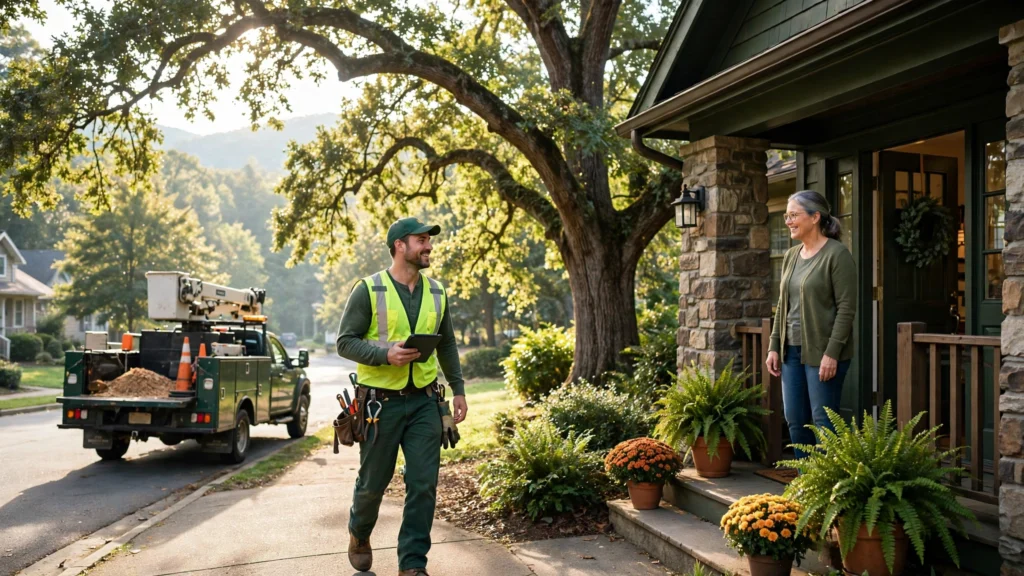
Tree removal prices vary because each project has different requirements.
A small tree in an open yard may be straightforward. A large tree near a house on a steep slope may require much more planning and labor.
Here are the main factors that can affect your estimate.
| Factor | What it means |
|---|---|
| Tree Height and Trunk Size | Larger trees usually involve more cutting, handling, and equipment. Their height and trunk diameter can also affect how the work is organized. |
| Tree Condition | Dead, split, or storm-damaged trees may require additional precautions. The condition of the wood and supporting structure can change the removal method. |
| Location and Accessibility | A tree near a house, fence, road, or utility line may require controlled cutting. Limited access can also affect equipment setup and the amount of manual work involved. |
| Terrain and Ground Conditions | Steep slopes and uneven ground can make equipment placement difficult. Soil conditions may also affect access and working space. |
| Equipment Requirements | Some projects can be handled with standard tree removal equipment. Others may require specialized machinery based on the tree’s size and location. |
| Cleanup and Stump Grinding | Branch removal, log handling, debris hauling, and stump grinding can affect the total price. Ask whether each item is included in your estimate. |
Before hiring a contractor, request a written estimate with a clear description of the work.
For more pricing information, read our tree removal cost guide for Asheville homeowners.
Do You Need a Permit to Remove a Tree in Asheville?
Tree removal requirements can depend on where your property is located and which local rules apply.
A property inside Asheville city limits may be subject to different requirements from a property in an unincorporated part of Buncombe County.
Other factors may include zoning, development activity, protected areas, and the type of tree work involved.
Before starting a removal project:
- Confirm whether your property is inside Asheville city limits.
- Check applicable zoning and tree protection requirements.
- Ask whether the project requires a permit or approval.
- Review any restrictions connected to development or property use.
- Confirm requirements before cutting begins.
For current information, consult the City of Asheville or Buncombe County directly.
Do not assume that every tree on private property can be removed without checking local requirements.
How to Choose a Tree Removal Company in Asheville
Tree removal involves heavy equipment, cutting tools, and potentially dangerous falling wood.
Before hiring a contractor, take time to review the proposed work.
Check Insurance Documentation
Ask for current liability insurance documentation.
Also ask whether workers’ compensation coverage applies to the workers performing the job.
Verify the documents rather than relying only on verbal assurances.
Request a Written Estimate
A written estimate should explain:
- Which trees will be removed.
- What removal method is proposed.
- Whether debris cleanup is included.
- Whether stump grinding is included.
- Any additional equipment charges.
- The expected project scope.
Discuss Property Protection
Ask how the contractor plans to protect nearby buildings, fences, driveways, and landscaping.
Discuss equipment access and the placement of removed material.
Ask About Similar Projects
Ask whether the contractor has handled trees of similar size and location.
Examples of previous work can help you understand the company’s experience.
Compare More Than the Price
A lower estimate does not always cover the same work as a higher one.
Compare the removal method, cleanup, equipment, and included services before making a decision.
Tree Removal for Properties Across Asheville and Surrounding Areas
Properties throughout Western North Carolina can present different tree removal challenges.
Some have mature trees near residential buildings. Others have sloped yards, dense vegetation, or limited equipment access.
Our planned service-area coverage includes:
- Asheville, NC
- Arden, NC
- Black Mountain, NC
- Weaverville, NC
- Fletcher, NC
- Candler, NC
- Fairview, NC
- Hendersonville, NC
- Mills River, NC
- Swannanoa, NC
- Woodfin, NC
Contact us to confirm service availability for your property.
Frequently Asked Questions About Tree Removal
How much does tree removal cost in Asheville, NC?
The price depends on the tree’s height, trunk size, condition, location, equipment needs, and cleanup requirements. An on-site assessment provides a more useful estimate than a general online price.
Can I remove a tree myself?
Small tree work may appear manageable, but larger trees can involve serious hazards. Cutting near buildings, power lines, or unstable branches requires appropriate training and equipment. Avoid attempting dangerous removals yourself.
Does tree removal include stump removal?
Not necessarily. Tree removal and stump grinding are often separate services. Confirm whether stump grinding is included in the written estimate.
Can you remove a tree close to my house?
Trees near buildings can sometimes be removed through controlled sectional dismantling. The method depends on available space, tree condition, and nearby obstacles.
What happens to the wood after tree removal?
The wood may be cut into manageable logs, chipped, hauled away, or left on the property if agreed beforehand. Confirm the cleanup plan before the project begins.
Should I remove a dead tree immediately?
The urgency depends on its condition and location. A dead tree near a house, driveway, or walkway may need prompt attention. Keep people away from unstable trees until they can be assessed.
Is tree removal covered by homeowners insurance?
Coverage depends on your insurance policy and the circumstances. Damage to an insured structure may be treated differently from a tree falling in an open yard. Contact your insurance provider before arranging non-emergency work.
Can a tree be removed during winter?
Tree removal can take place during different seasons, depending on weather, ground conditions, access, and the project’s requirements. Severe weather can delay work.
How long does tree removal take?
The time depends on the tree’s size, condition, location, and removal method. A small removal may take much less time than a large tree near buildings or other obstacles.
What should I do if a tree falls on my property?
Keep people away from the fallen tree and any damaged structures. Stay clear of power lines and unstable branches. If there is an immediate danger, contact emergency services. Arrange professional assistance when the area is safe.
Request a Tree Removal Estimate in Asheville
A damaged, dead, or poorly positioned tree deserves proper attention.
Whether you need one tree removed or several trees cleared from your property, start by discussing the conditions and work involved.
Share the tree’s location, its approximate size, and any nearby structures. Photos taken from a safe distance can also help explain the situation.
Contact us to discuss your tree removal needs in Asheville, NC.
Request a Tree Removal Estimate
Phone: +1 (844) 581-1444